GLP-1
What to eat on Ozempic to keep your muscle
Jonathon PirpichNASM-Certified Personal Trainer5 min read

The short answer
On Ozempic or Wegovy, eat small protein-forward meals every three to four hours instead of trying to finish big ones. A 2025 joint advisory notes protein targets of 1.2 to 1.6 grams per kilogram have been proposed during active weight loss, or a flat 80 to 120 grams a day. Stay hydrated, add fiber gradually, and pair it with strength training.
Eating on Ozempic comes down to one problem: fitting enough protein into a stomach that says "done" after six bites. Willpower is the one thing you have plenty of right now.
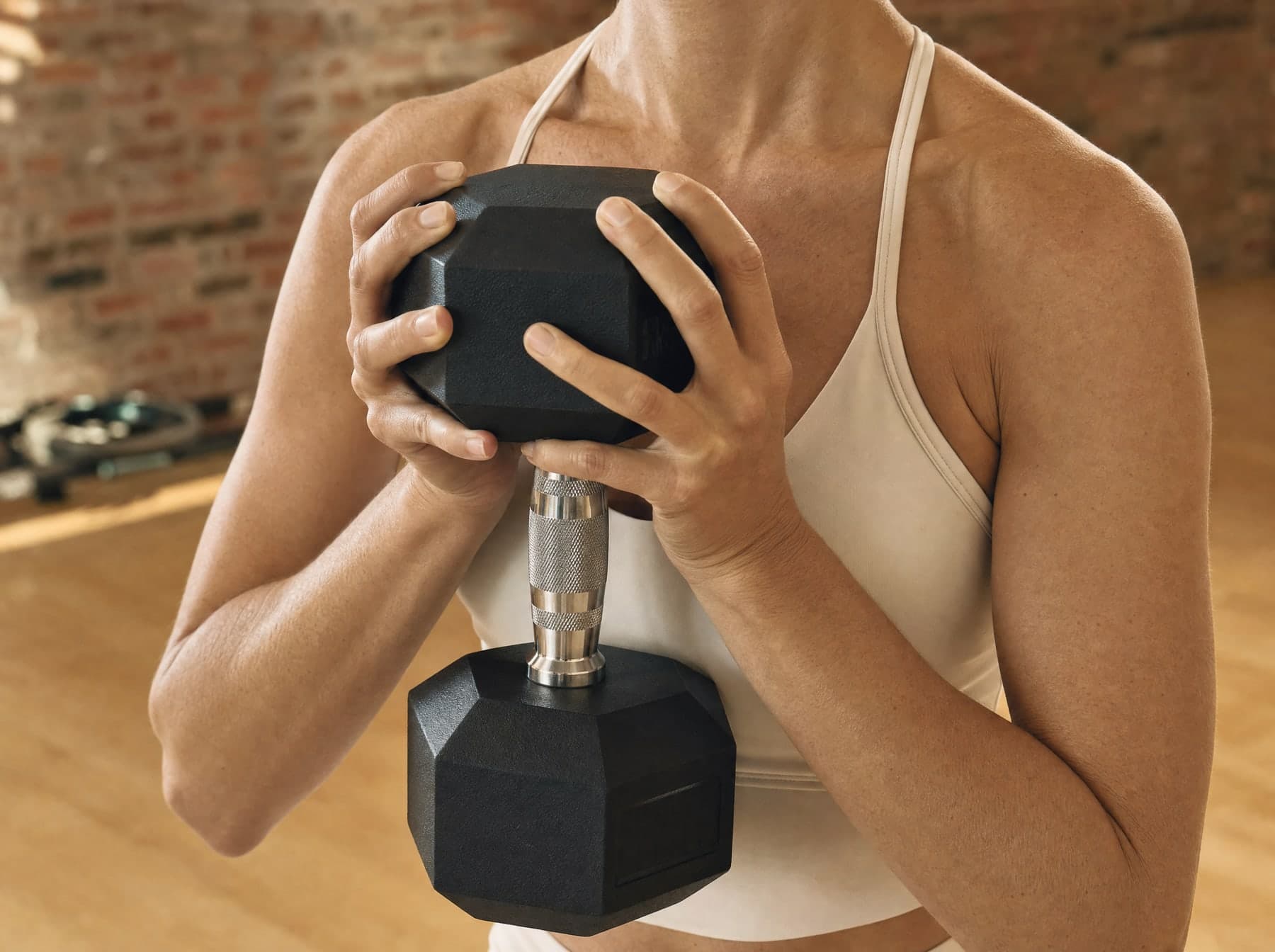
That matters because what you lose on a GLP-1 depends a lot on protein and lifting. In the STEP 1 trial's body-composition scans, people on semaglutide lost 19.3% of their fat and 9.7% of their lean mass (Journal of the Endocrine Society, 2021). You want the first number big and the second one small. Food is half of how you get there. The other half is in keeping your muscle on Ozempic.
How much protein do you need on Ozempic?
More than most people eat. A 2025 joint advisory from four obesity and nutrition societies notes that targets of 1.2 to 1.6 grams per kilogram of body weight a day have been proposed during active weight loss, or a flat 80 to 120 grams a day (Obesity, 2025).
The math, for a 180-pound woman: 180 / 2.2 = ~82 kg. At 1.2 to 1.6 g/kg that's ~98 to 131 grams a day. On a suppressed appetite, the low end is the realistic target for the first few weeks. The baseline RDA for adults is 0.8 g/kg, about 65 grams for her, which is roughly where a lot of people land without trying, and it isn't enough to protect muscle in a steep deficit. If you have kidney disease, get your doctor's number before raising protein.
How should you eat when you have no appetite?
Small meals, often. The same advisory suggests a small breakfast, then additional small meals every 3 to 4 hours, staying hydrated, and keeping portions modest, because large meals make nausea and vomiting more likely.
In practice that's four or five small eating moments a day instead of three regular meals. Each one gets anchored by a protein food, and you stop when you're full. Trying to clean your plate on a GLP-1 is how people end up sick and then quit eating protein altogether.
What are the easiest high-protein foods on a GLP-1?
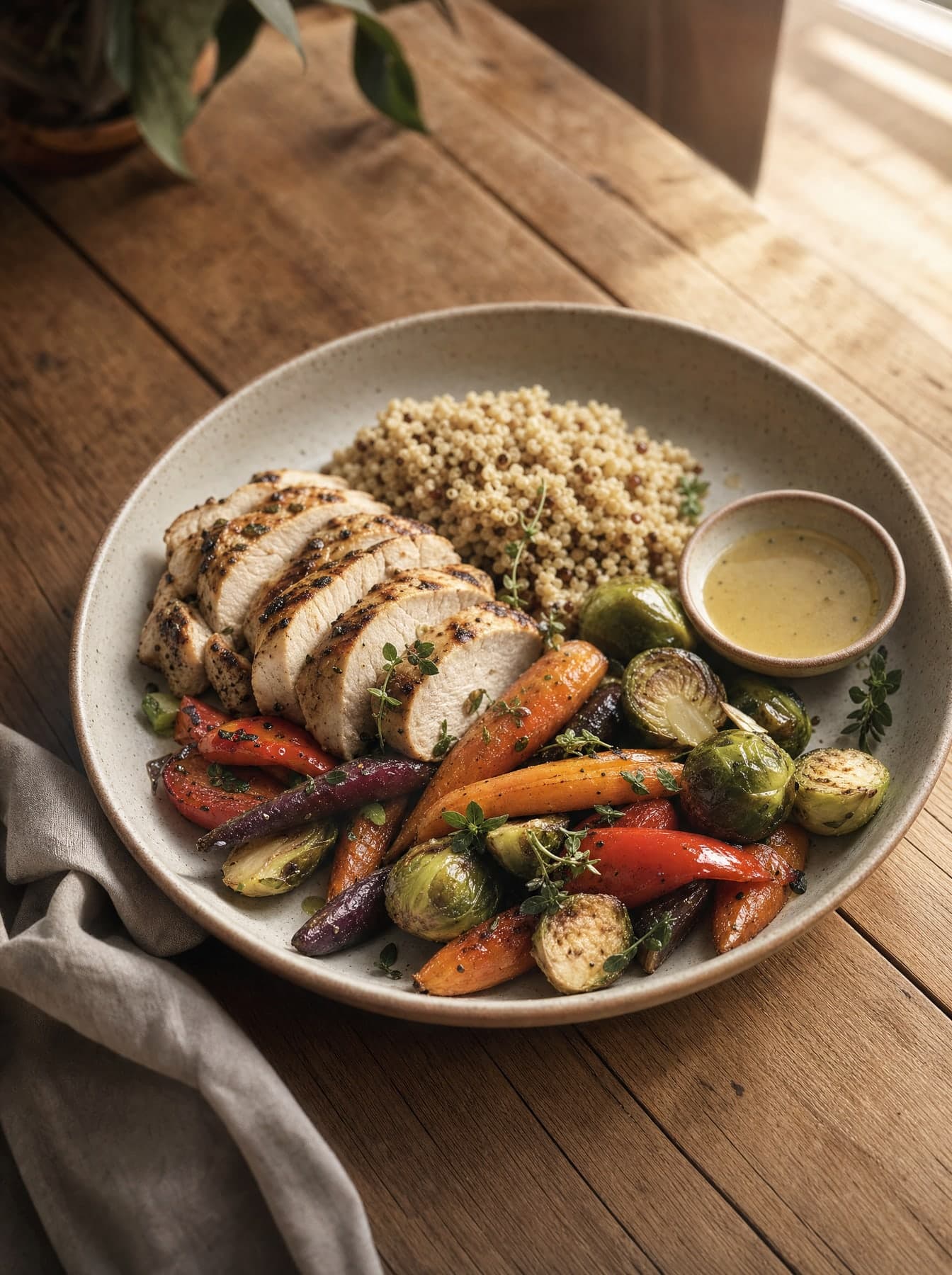
Foods that are dense, soft and quick: Greek yogurt, cottage cheese, eggs, protein shakes, lean chicken, fish and tuna. Numbers below are approximate, so check your labels (USDA FoodData Central).
| Food | Typical serving | Protein, approx. |
|---|---|---|
| Plain nonfat Greek yogurt | 1 single-serve cup (~170 g) | ~17 g |
| Low-fat cottage cheese | 1/2 cup | ~12 g |
| Eggs | 2 large | ~12 g |
| Protein shake | 1 bottle or scoop | ~20 to 30 g, per label |
| Chicken breast, cooked | 3 oz | ~26 g |
| Canned tuna | 3 oz | ~20 g |
| Salmon, cooked | 3 oz | ~22 g |
Liquids are often easier than solids when you feel full fast. A shake between meals is one of the simplest ways to close a 25-gram gap.
What does a high-protein day on Ozempic look like?
Five small eating moments, each built around protein, adding up to roughly 100 grams. Here's one example. Swap foods freely, the structure is what matters.
- 7:30 am: Greek yogurt cup with a few berries (~17 g)
- 10:30 am: protein shake (~25 g)
- 1:00 pm: half a chicken breast with vegetables (~20 g)
- 4:00 pm: 1/2 cup cottage cheese (~12 g)
- 7:00 pm: 3 oz salmon with a small side (~22 g)
That's ~96 grams. Add two eggs anywhere and you're past 100. None of those portions is big, which is the point.
Which foods make GLP-1 side effects worse?
Big meals and greasy, high-fat foods, mostly. The advisory recommends smaller, more frequent meals and avoiding fatty or high-fiber foods during the first few days of treatment.
There's a catch worth knowing about. The advisory also notes that foods high in protein or fat can further slow stomach emptying, which can make constipation worse. So "eat more protein" has to come with "in small portions" and "drink enough water." Lean proteins over fried ones, and spread through the day instead of stacked into dinner.
How do you handle constipation on a GLP-1?
Fluids first, then fiber added gradually. The advisory encourages adequate fluids and gradually increasing soluble and insoluble fiber, with prunes or other dried fruit as an example.
Gradual is the key word. Jumping from almost no fiber to a giant salad on a slowed-down stomach usually backfires. If constipation lasts more than a few days or comes with pain, call your prescriber. That one isn't a coaching question.
Does what you eat matter after you stop the medication?
It matters more. The habits you build while appetite is suppressed are the ones you'll rely on when it comes back.
People who stopped semaglutide in the STEP 1 extension regained about two-thirds of their weight loss within a year. Protein habits and lifting are the two levers you control that protect against that. The full plan is in coming off Ozempic or Wegovy without the rebound.
Getting a plan built for you
Everything above is a starting point. Your plan should account for your dose, your side effects, your schedule and the foods you'll actually eat.
One pitch. My studio builds the meal plan and the lifting plan together for people on GLP-1s in Flower Mound, with medication questions staying between you and your doctor. Here's how GLP-1 support works, and the free 6-Week Challenge includes a custom meal plan and a Day 1 body-composition scan. If you're also over 40, how much protein women over 40 actually need covers the age side of the protein question.
Common questions
How much protein should I eat on Ozempic?
A 2025 joint advisory from four obesity and nutrition societies notes targets of 1.2 to 1.6 grams per kilogram of body weight a day have been proposed during active weight loss, or an absolute 80 to 120 grams a day. Ask your prescriber if you have kidney disease.
What should I eat when I have no appetite on a GLP-1?
Small, protein-forward portions every three to four hours. Greek yogurt, eggs, cottage cheese, a protein shake, lean chicken or fish. Liquids like a shake are often easier to finish than a full plate when you feel full quickly.
What foods make Ozempic side effects worse?
Large meals and greasy, high-fat foods are the usual culprits. The joint advisory suggests smaller, more frequent meals and avoiding fatty or high-fiber foods during the first few days of treatment, then adding fiber back gradually.
Do protein shakes count on a GLP-1?
Yes. A shake is one of the easiest ways to add 20 to 30 grams when solid food is hard. Use it to fill gaps rather than replace every meal, and choose one with a protein amount you can read clearly on the label.
Why do I feel constipated on Ozempic?
GLP-1s slow stomach emptying, and high-protein or high-fat foods slow it further. The advisory recommends enough fluids and gradually increasing fiber, such as prunes, and checking with your prescriber if it persists.
Sources
- Nutritional priorities to support GLP-1 therapy for obesity: a joint advisory from ACLM, ASN, OMA and The Obesity Society. Obesity, 2025.
- Impact of semaglutide on body composition in adults with overweight or obesity: exploratory analysis of the STEP 1 study. Journal of the Endocrine Society, 2021.
- FoodData Central. U.S. Department of Agriculture.
This article is general fitness education, not medical advice. Check with your doctor before starting a new program, especially if you are pregnant, postpartum, on medication, or managing a health condition.