Perimenopause
How much strength training do you need in menopause?
Jonathon PirpichNASM-Certified Personal Trainer5 min read
The short answer
Most women in menopause should strength train at least two days a week, and two to three is better. Each session should hit the whole body with a squat, hinge, push, pull and carry, two to four sets each, with the last reps feeling hard. The CDC sets two strength days a week as the minimum for every adult, and in menopause that minimum matters more.
Two days a week, minimum. That's the short answer, and it's the one most women already suspect. The more useful answer is what those two days should actually contain, because "strength training" covers everything from a real program to a 20-minute circuit with 3-pound pink dumbbells.
How much strength training do you need in menopause?
At least two sessions a week, and two to three is better. The CDC sets 2 days of muscle-strengthening a week as the minimum for every adult, along with 150 minutes of moderate activity (CDC).
In menopause the minimum carries more weight. SWAN, the largest long-term study of the transition, found lean mass starts declining as the transition begins while the rate of fat gain roughly doubles (JCI Insight, 2019). Strength training is the main signal that pushes back on both.
What should a menopause strength workout include?
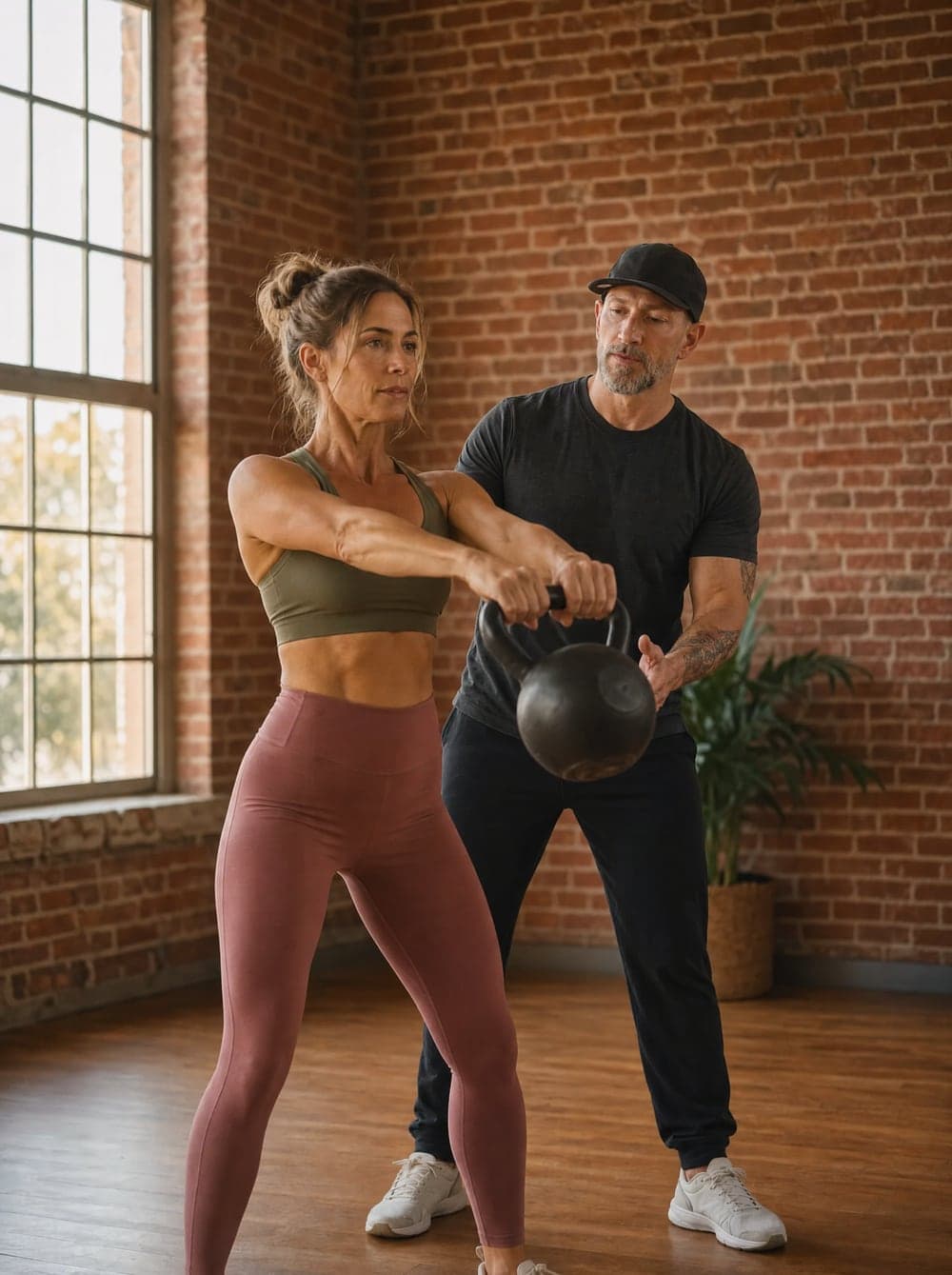
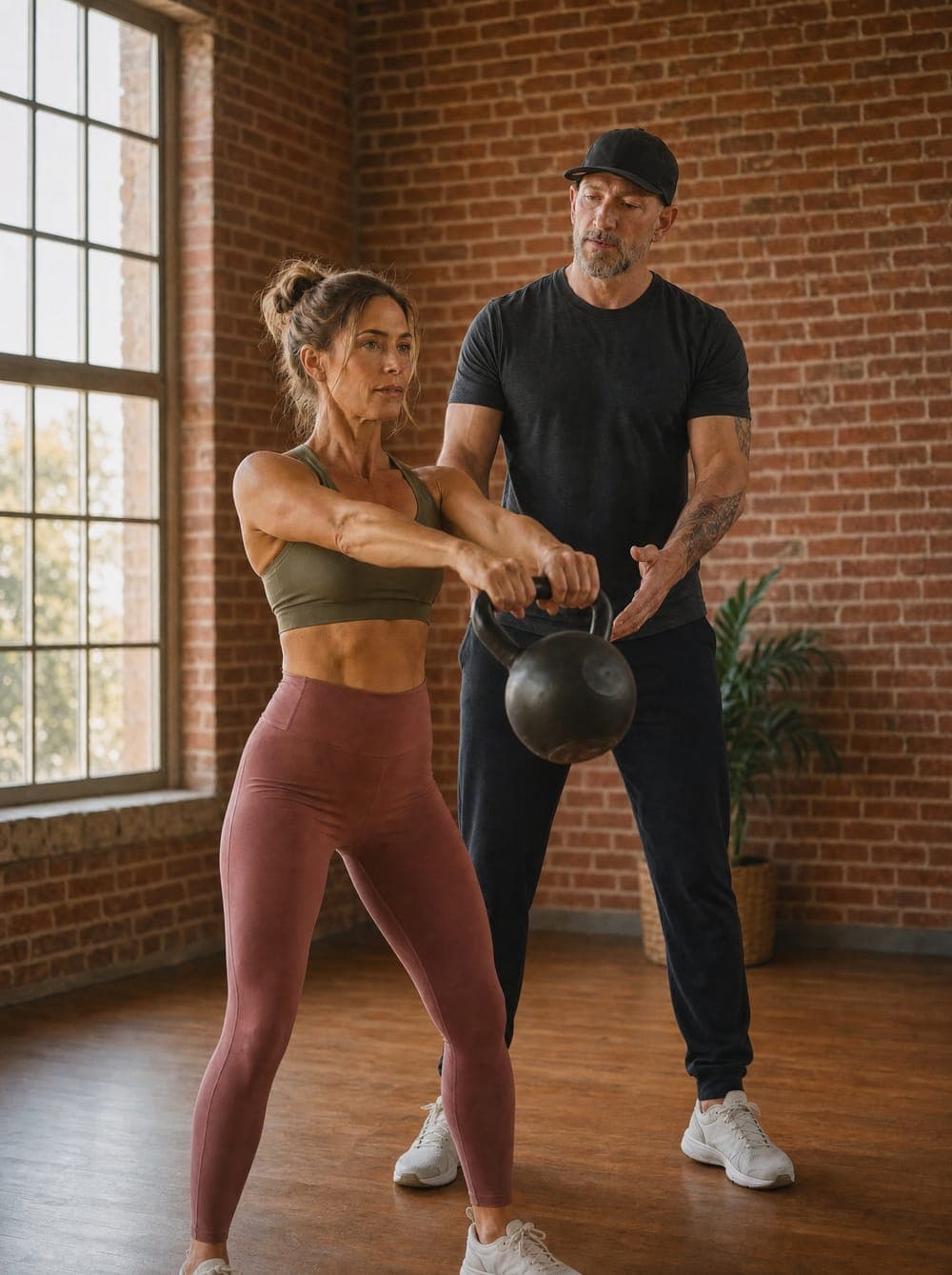
The whole body, every session, built on five movements: squat, hinge, push, pull and carry. That covers your legs, hips, back, chest, shoulders and grip without needing a different routine for every body part.
A sensible weekly starting template looks like this:
| Session A | Session B | |
|---|---|---|
| Squat pattern | Goblet squat | Leg press or split squat |
| Hinge pattern | Romanian deadlift | Hip thrust or glute bridge |
| Push | Incline dumbbell press | Overhead press or push-ups |
| Pull | Seated cable row | Lat pulldown or band pull |
| Carry | Farmer carry | Suitcase carry, one side at a time |
| Sets and reps | 2 to 4 sets of 6 to 12 | 2 to 4 sets of 6 to 12 |
Two sessions of that, a few days apart, plus walking on most other days. That's a complete week.
How heavy should you lift in menopause?
Heavier than most women are told, built up gradually. The last two or three reps of each set should feel like real work while your form stays clean.
The best evidence that heavy can be safe comes from LIFTMOR, a trial in postmenopausal women with low bone mass (JBMR, 2018). Over 8 months of twice-weekly, 30-minute supervised sessions at 5 sets of 5 reps above 85% of their max, lumbar spine bone density rose 2.9% in the lifting group while it fell 1.2% in the low-intensity group, with no significant adverse events reported. Those women were supervised and progressed over time. Nobody walked in on day one and lifted 85%.
If you have a bone density diagnosis, read strength training with osteoporosis: what's safe and what to skip before you load your spine.
How do you know when to add weight?
When you can finish the top of your rep range with good form, add a little. Five pounds on lower-body lifts, two to five on upper-body lifts, then work back up through the reps.
That's progressive overload, and it's the part most menopause workouts skip. The same weight for six months is maintenance at best. Your body adapts to what you ask of it, so the ask has to keep growing a little.
Is cardio or strength training better in menopause?
You need both, and they do different jobs. Cardio is great for your heart, mood and sleep. Strength training protects muscle and loads bone, which cardio mostly doesn't.
If you only have three hours a week, spend two of them lifting and one walking briskly, not the other way around. Muscle loss is already running at about 3 to 5% per decade from age 30 (womenshealth.gov), and menopause gives it a push.
How long does a menopause strength workout need to be?
Thirty to sixty minutes is plenty. The LIFTMOR sessions were 30 minutes, twice a week, and they moved bone density.
Napkin math: two 45-minute sessions is 90 minutes a week. With 16 waking hours a day, that's 90 / 6,720 minutes, or ~1.3% of your waking week. It's hard to find a cheaper health habit with a bigger payoff.
What gets in the way, and how do you fix it?
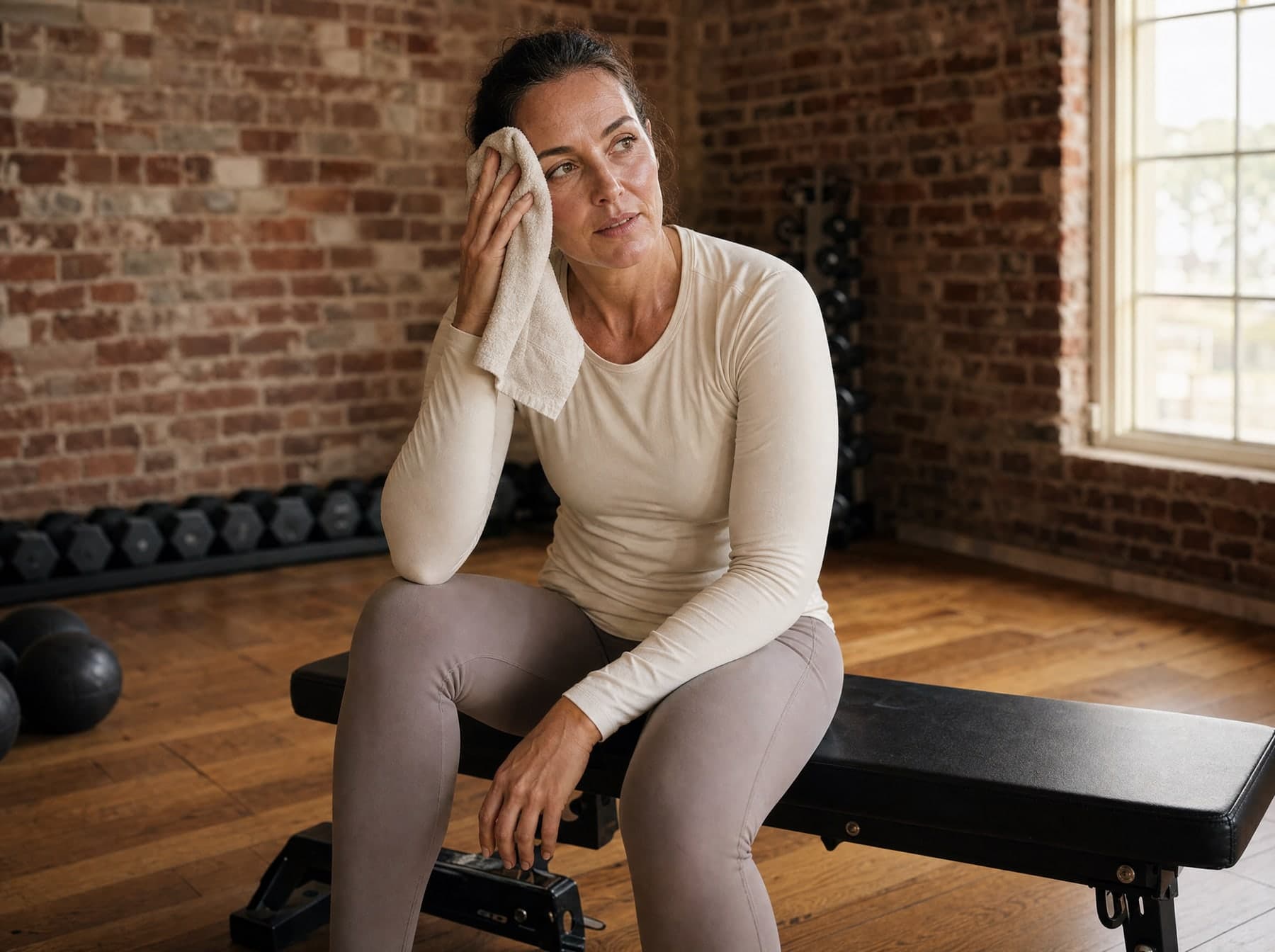
Sleep, joint aches and schedule, mostly. All three are solvable without quitting.
- Bad sleep: keep the session, drop the intensity a notch. A lighter workout beats a skipped one.
- Achy joints: swap the exercise, keep the pattern. A leg press instead of a squat, a trap-bar instead of a barbell.
- No time: two 30-minute sessions done consistently beat one perfect hour you never get to.
If belly fat is your main frustration, perimenopause belly fat: what actually moves it covers how lifting fits with food. For the bigger picture of why menopause changes the rules, read why perimenopause weight gain isn't a willpower problem.
Want someone to build the plan?
One pitch, then you can go lift. If you're in Flower Mound, here's how perimenopause and menopause coaching works at my studio. The free 6-Week Challenge gives you two coached sessions a week, a meal plan and Day 1 and Day 42 body-composition scans, so you'll see what's changing under the scale.
Common questions
How many days a week should I lift weights in menopause?
At least two, which is the CDC's minimum for every adult. Three is better if your sleep and schedule allow it. Leave a day between sessions so you recover, and walk on the other days.
Should I lift heavy weights during menopause?
Heavier than most women think, built up gradually. In the LIFTMOR trial, postmenopausal women with low bone mass who lifted at high intensity under supervision improved spine bone density. Start moderate, learn the movements, and progress over weeks.
How many sets and reps should I do in menopause?
A good starting point is two to four sets of six to twelve reps per movement, with the last two or three reps of each set feeling like real work. Add weight when you can finish the top of the rep range with clean form.
Is cardio or strength training better for menopause?
You need both, but strength training does things cardio can't, like protecting muscle and loading bone. Keep walking for heart health and mood, and treat two to three lifting sessions as the non-negotiable part of the week.
How long should a strength workout be in menopause?
Thirty to sixty minutes is plenty. In the LIFTMOR trial, sessions were 30 minutes twice a week. Focus beats length, so a short session you do consistently beats a long one you skip.
Sources
- Physical activity guidelines for adults. Centers for Disease Control and Prevention.
- High-intensity resistance and impact training improves bone mineral density and physical function in postmenopausal women with osteopenia and osteoporosis: the LIFTMOR randomized controlled trial. Journal of Bone and Mineral Research, 2018.
- Changes in body composition and weight during the menopause transition. JCI Insight (Study of Women's Health Across the Nation), 2019.
- Sarcopenia. Office on Women's Health, U.S. Department of Health and Human Services.
This article is general fitness education, not medical advice. Check with your doctor before starting a new program, especially if you are pregnant, postpartum, on medication, or managing a health condition.