Postpartum
Rebuilding strength postpartum: a realistic 6-week guide
Jonathon PirpichNASM-Certified Personal Trainer8 min read
One of my proudest client stories is Hilary. She came to me postpartum after her second baby, overwhelmed and honestly unsure whether she belonged in a gym at all. Over our time together she lost 70 pounds, built real muscle, and, in her own words, regained confidence in her body. None of it came from bouncing back. It came from rebuilding, in the right order.
This is the order. If you are postpartum and wondering where to start, this guide is the roadmap I use with every new mom in my studio.
When can you start exercising after having a baby?
After your doctor clears you, typically around six weeks for an uncomplicated vaginal delivery and often eight or more after a C-section. That clearance is the starting line, not a green light to jump into whatever you did before pregnancy. Your core, pelvic floor, and connective tissue spent nine months adapting, and they rebuild on their own timeline, not your calendar's.
Weeks 1 and 2: rebuild the foundation
- Breathing and deep core reconnection: learning to engage the transverse abdominis again, which pregnancy stretches and weakens
- Pelvic floor activation, gentle and consistent, coordinated with breath
- Walking and easy movement to rebuild a daily rhythm
- Bodyweight basics: glute bridges, supported squats, wall work
This phase looks unimpressive from the outside and matters more than everything that follows. Skipping it is how postpartum women end up with lingering back pain, leaking, or a core that never quite feels connected again.
Weeks 3 and 4: reintroduce load
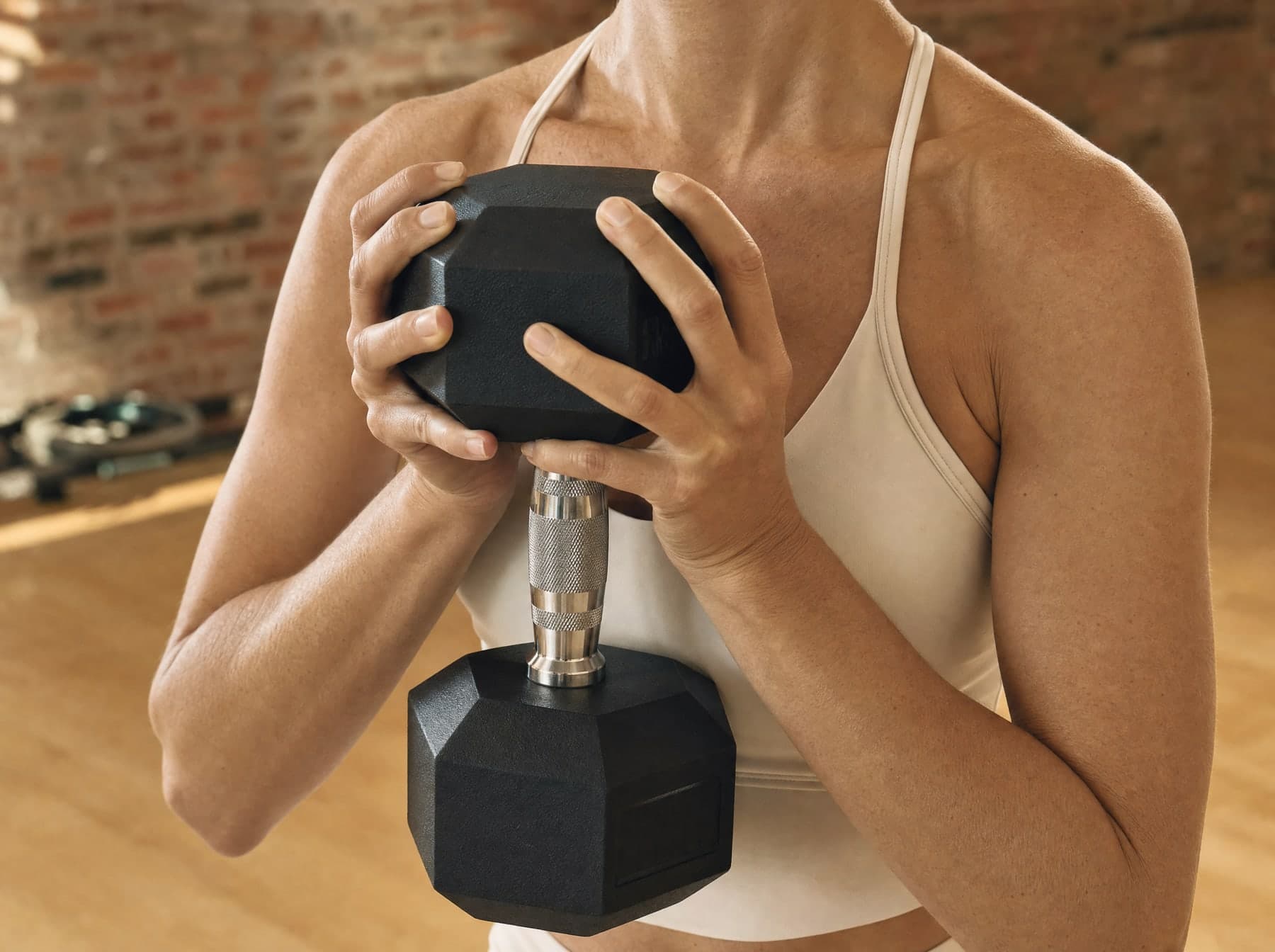
Once the deep core is firing, we add resistance: goblet squats, supported rows, hinge patterns, carries. Weights stay moderate and every rep is watched, because postpartum joints are still under the influence of relaxin and form matters more than usual. Most moms are surprised how fast strength returns in this phase. The body remembers.
Weeks 5 and 6: train like it is normal, because it is
By week five most of my postpartum clients are doing real strength sessions: progressive lifts, structured programming, measurable numbers going up. The difference from any other client is just the watchfulness around the core and pelvic floor, which stays part of the programming for months.
What about diastasis recti?
Abdominal separation is common and usually improves with exactly the core-first progression above. What makes it worse is loading a separated core too early with crunches, planks, and heavy lifting before the deep core can manage pressure. If your separation is significant, a pelvic-floor physical therapist is worth the visit, and I am glad to program around their guidance. That combination works well and I use it regularly.
The two things nobody puts in the workout plan
- Sleep deprivation is a training variable. A plan that ignores the 4 a.m. feeding is a plan you will quit. Session intensity should flex with your week. Mine do.
- Food has to work with feeding. If you are nursing, this is not the time for aggressive cutting. Protein targets and satisfying meals support recovery, supply, and sanity at once.
You do not need to do this alone
The postpartum women who struggle most in my experience are not the ones lacking effort. They are the ones trying to piece this together alone from conflicting internet advice at 2 a.m. A coach who has run this rebuild dozens of times removes the guesswork. Here is how postpartum coaching works at my Flower Mound studio, and the free 6-Week Challenge maps exactly onto the six weeks above.